September 22, 2020

Investigation of biogas emitted from a dairy plant lagoon and proposing an innovative Honeycomb Gas Collector(HGC) | JBES V.15 N.3


Investigation of biogas emitted from a dairy plant lagoon and proposing an innovative Honeycomb Gas Collector(HGC)
By: Leila Peyman, Hamid Reza GHassemzadeh, Shamsollah Abdollahpoor, Hassan Taghipour


english language editing
JBES welcome all respective authors to submit their research paper / manuscripts, thesis paper in the field of Environmental Sciences, Biology, BiodiversitySpecies diversity, Ecology, Taxonomy and many more via online submission panel

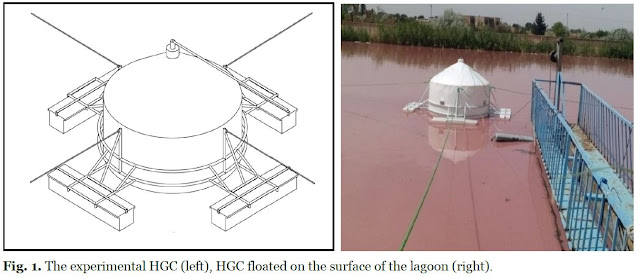
Peghah Dairy Plant in Tabriz, Iran, near Shahid Madani International Airport uses a combination of two wastewater treatment systems, namely, lagoon and activated sludge system. Presence of a lagoons near airports can affect passengers getting off the planes due to unpleasant odor and has always been a controversial issue from the urban planners’ point of view. Most of the biological activities in the lagoons are anaerobic producing odorous gases as a result. On the other hand, biogas produced by biological activities enters into the atmosphere, contributing to global warming. To avoid an environmentally adverse effects of the emitted gases from the lagoon in Peghah Diary Plant in Tabriz, the possibility of using the collected gases from the lagoon in heating processes within the plant was studied. In this study, a single experimental unit of an innovative gas collector, named Honeycomb Gas Collector (HGC), was designed and constructed to cover the surface of the lagoon and lagoon inputs were recorded and samples of biogas from the lagoon were collected and analyzed during April 2016 until March 2019. The highest daily amount of 44.82 m3 biogas from the entire lagoon was recoded in August 2016. Temperature and pH had the most and least significant effect on biogas production respectively. There was a strong relationship with a coefficient of 0.94 between the temperature and the volume of biogas produced. This system proved to be less costly and maintenance free method for covering the lagoon surface.

Investigation of biogas emitted from a dairy plant lagoon and proposing an innovative Honeycomb Gas Collector(HGC)

 Introduction

Peghah Dairy Plant is located in north of Tabriz, Iran, about 1.7km far from Shahid Madani International Airport. Passengers getting off the planes as well as nearby residents are affected by unpleasant odor emitted from lagoon. About 330 to 400 tons of raw milk is delivered to the diary plant for processing on daily basis. Around 1000m3/day of effluent is discharged from the plant. The capacity of anaerobic sewage and the activated sludge systems are 7500m3 and 800m3, respectively.

The high volume of wastewater produced by diary industries, along with their significant contamination, have led to enforcing strict regulations for these industries in different countries. Organic matter in dairy effluents comprises mainly of carbohydrates, proteins, and fats (Vlyssides et al., 2012). The dairy industries are one of the most polluting industries not only because of their high volume of wastewater, but also due to its characteristics (Kushwaha et al., 2011). Wastewater from such industries often cannot be treated by aerobic methods alone because of its high toxicity and chemicals as well as high Biological Oxygen Demand (BOD). The amounts of suspended solids are 2000gr/m3, COD (Chemical Oxygen Demand) 3700gr/m3, and BOD 2500gr/m3 (Sabliy et al., 2009). The combined method is the best for the treatment of dairy wastewater. Researchers have proposed an anaerobic-anaerobic treatment method for dairy wastewater treatment (Kushwaha et al., 2011).

The average consumption of milk per capita per year in Iran is about 91kg, while the average consumption in the world is 156kg and in European countries it is 300kg. In order to increase per capita consumption of milk in the country, the volume of milk and dairy products will have to be increased and this will result in producing more wastewater. The wastewater of the dairy industries is warm and has high COD, this makes it suitable for anaerobic treatment in the first stage. Anaerobic processes produce significant amounts of methane. Also the unpleasant odor production occurs in this stage. Whey is one of the most polluting wastewater. Its biochemical constituents are rich in organic matter (Shete, and Shinkar, 2013; Rajshoori et al., 2000). Worldwide cheese production generates more than 145 million tons of whey each year. Wastewater from the cheese industry has a very high level of COD about 50,000 to 80,000mg/L. (Najafpour et al., 2008). 

READ MORE

Research Paper on vegetables | Towards valorizing spinach and amaranth’s leaves in Eastern democratic republic of Congo | IJAAR 2019

Common anaerobic methods in dairy wastewater treatment mainly include Up flow Anaerobic Baffled Reactor (UABR), Up flow Anaerobic Sludge Blanket reactor (UASB), up flow Anaerobic Fixed Biofilm Reactor (UAFBR), Anaerobic Lagoon and common aerobic methods include conventional Activated Sludge, Moving Bed Biofilm Reactor (MBBR), Sequencing Bach Reactor (SBR) based on activated sludge method. Sometimes the post-treatment phase for the dairy industry wastewater is carried out by physio-chemical methods which include coagulation and flocculation methods. These methods can be referred to as membrane processes such as Nano filtration and reverse osmosis (Kushwaha et al., 2011).

Investigation of biogas emitted from a dairy plant lagoon and proposing an innovative Honeycomb Gas Collector(HGC)
Lagoon systems are suitable for wastewater treatment in food processing industries. Anaerobic lagoons in the US and Australia have high acceptability due to their ability to treat high BOD wastewater, availability of large areas for lagoon construction, and low operating costs (Johns, 1995). It should be noted that due to space constraints in Europe, demand for lagoons is low and they are more inclined to use reactor systems. In Asia, lagoons are mostly used for palm oil purification (BOD>25000mg/L) (Laginestra, 2012).

The main advantage of using lagoon systems is the ease of construction, operation, and maintenance. However, a larger land is needed to build it. It is possible to use the lagoon if the whole complex of treatment system is located out-of-town space of city. Warm weather improves bacterial growth conditions. The pH of the lagoon should be 7 to 8. At pH below 6.5, the condition becomes acidic, odor production and sludge production increases. Under normal anaerobic conditions, organic matter is converted to biogas during the process of Hydrolysis, Acidogenesis, Acetogenesis and Methanogenesis. If there is no equilibrium between Acidogenesis and Methanogenesis phases, the odor is more likely to be produced (Zhang et al., 2013).

In UASB, Fat, Oil and Grease (FOG) may accumulate. The growth of dispersed grains and the accumulation of sludge and FOG leaching from the reactor cause severe operational problems. To overcome these problems, pre-treatment methods such as fat removal by Dissolved Air Flotation (DAF) or the use of some contact reactors will be required (Rilo et al., 2014). This operation needs a long launch time. The reactor requires a skilled operator and continuous monitoring operations. (Rajeshwari et al., 2000).

In the UABR, the wastewater is treated by passing through a number of upward and downward chambers. In this type of reactor, the solids retention time in the reactor is longer than the hydraulic retention time. The severe effect of shocks gradually diminishes on Sequential baffles. Due to the accumulation of gas in the UABR reactor, there is no access to the reactors in case of any problems or to check overflows.

To increase the efficiency in UABR, the media is mounted in the upstream section of the reactor (UAFBR), which is used to prevent sludge escape as well as increase biological contact and subsequently increase the treatment efficiency.

Each of the anaerobic methods already mentioned above require their own equipment and has its own complications. The biogas produced by the anaerobic process includes CH4 (70-60%), CO2 (40- 30%), H2S (10-2000 ppm), N2 (less than 2%), NH3, H2, CO, and O2 (Siefers, 2010). The biogas odor arises mainly from H2S, Volatile Organic Compounds (VOCs), and NH3. H2S is extremely odorous and corrosive and even in very small quantities causes severe corrosion in pipes and other equipment (Krich, 2005).

The overall goal is to prevent the releasing of biogas and some odorous gases produced during the anaerobic process into the atmosphere. In the present work, a single experimental unit of an innovative gas collector, named Honeycomb Gas Collector (HGC), was designed and constructed to cover the surface of the lagoon for reducing odor, especially in windy days and preventing methane release into the atmosphere. Then, the amount of methane and hydrogen sulfide in biogas and the factors affecting biogas production were studied over three years.

Get the full articles by following this link  J. Bio. Env. Sci. 15(3), 1-9, September 2019.

Reference   of   the   articles :

Johns MR. 1995. Development in wastewater treatment in the meat processing industry: A review, Bioresource technology, volume 54(1995) – 203-216. BioSource Technology 54 (1995) 203-216

Krich K, Augenstein D, Batmale JP, Benemann J, Rutledge B, Salour D. 2005. Biomethane from dairy waste. A Sourcebook for the Production and Use of Renewable Natural Gas in California. prepared for Western United Dairymen Michael Marsh.

Kushwaha JP, Srivastava VCH, Mall ID. 2011. an overview various technologies for the treatment of diary wastewaters, Critical reviews in food science and nutrition 51, 442-452.

Laginestra M. 2012. Covered Anaerobic Lagoons Final Report. published by Meat & Livestock Australia Limited ABN 39 081 678 364 (MLA).

Najafpour GD, Hashemiyeh BA, Asadi M, Ghasemi MB. 2008. Biological Treatment of Dairy Wastewater in an Upflow Anaerobic Sludge-Fixed Film Bioreactor, American-Eurasian J. Agric. & Environ. Sci., 1818-6769 4(2), 251-257.

Rajeshwari KV, Balakrishna M, Kansal A, Lata K, Kishore VVN. 2000. State of the Art of Anaerobic Digestion Technology for Industrial Wasetwater Treatment, Rnnewable and Sustainable Energy Reviews 4(2000), 135- 156.

Rilo SM, Coimbra RN, Villacorta JM, Otero M. 2014. Treatment of Dairy Industry Wastewater by Oxygen Injection, Journal of Cleaner Production.

DOI: 10.1016/j.jclepro.2014.08.026.

Sabliy L, Kuzminskiy Y, Gvozdyak P, Lagod G. 2009. Anaerobic and Aerobic Treatment of Wastewater of Milk Plants, Proceedings of ECOpole- Vol. 3, No. 2, 373-378.

Shete BS, Shinkar NP. 2013. Dairy Industry Wastewater Sources, Characteristics & its Effects on Environment. Research Article. International Journal of Current Engineering and Technology. 2277 – 4106. vol.3, No.5. 1611-1615.

Siefers AM. 2010. A Novel and Cost-Effective Hydrogen Sulfide Removal Technology Using Tire Derived Rubber Particles, Theses and Dissertations, Iowa State University, 11281.93 pages.

Stenglein RM, Clanton CJ, Schmidt DR, Jacobson LD, Janni KA. 2011. Covers for Mitigation Odor and Gas Emissions in Animal Agriculture: www.exrension.org/pages/15538/air-quality-in-animal-agriculture.

Vlyssides A, Tsimas E, Barampouti EM, Mai S. 2012. Anaerobic Digestion of Cheese Dairy Wastewater Following Chemical Oxidation. Bio systems engineering. 15375110. II 3, 253-258

Zhang XL, Yana S, Tyagi RD, Surampalli RY. 2013. Odor Control in Lagoons. Journal of Environmental Management. 124, 62-71.

DOI: 10.1016/j.jenvman. 2013.03.022

September 21, 2020

Leguminous vegetables production and marketing in Southern Benin | Ijaar vol-15-no-4


Leguminous vegetables production
By: Eric Etchikinto Agoyi, Konoutan Médard Kafoutchoni, Hospice Samson Sossou, Albérik Allagbé, Maurice Hounguèvou, Achille Ephrem Assogbadjo, Brice Sinsin


english language editing
"" IJAAR welcome all of you to submit your research paper for publication in the field of Agriculture, Agronomy, Horticulture etc. Please submit your manuscripts via Online submission panel.""
english language editing
As a preliminary study that sets ground for the introduction of new leguminous vegetables, this survey assessed the state of production and market characteristics of leguminous vegetables in urban and peri-urban areas of southern Benin.
Covering three administrative departments where most vegetable growers and traders are based in Benin, the study used the semi-structured interview approach with 105 respondents including vegetable growers and traders to gather information on diversity, pest and disease management practices, constraints, distribution channel of leguminous vegetable cultivated and willingness to adopt new leguminous vegetable species and varieties. The results showed clear task division between males and females. While a narrow diversity of leguminous vegetable species was grown in Benin, their production is highly market driven. Tunnel type greenhouse and open field farming were practiced in mono-cropping or crop rotation system with the use of poultry manure, animal dungs and mineral fertilizers as mean of fertilisation. The collectors and wholesalers were the most important stakeholders of the distribution channel, followed by the hotels and restaurants. Major constraints include pest and disease infestations, low yield achieved and lack of improved varieties. All respondents were willing to adopt new leguminous vegetable including vegetable soybean "edamame", peas, pigeon peas, mung bean, faba-beans, common bean. This study provides insights to the current situation and prospects of the legume vegetables sector in Benin, and can be used as decision tool for the introduction of new leguminous vegetable species to promote the sector and make substantial contribution to nutritional security in Benin. Get the full articles by clicking this link
Int. J. Agron. Agri. Res. 15(4), 30-41, October 2019.

Int. J. Agron. Agri. Res. 15(4), 30-41, October 2019.

Key Words: Leguminous vegetable, Edamame, Phaseolus, Beans

 REFERENCE

Akomagni, LA, Guidibi E. 2006. Monographie De La Commune De Cotonou. Afrique Conseil. Cotonou, Benin.

Ali M, Abedullah D. 2002. Nutritional And Economic Benefits Of Enhanced Vegetable Production And Consumption. Journal Of Crop Production 6(1-2), Pp.145-176.

Bayani EM. 2000. Reducing Micronutrient Malnutrition: Policies, Programmes, Issues, And Prospects—Dietary Diversification Through Food Production And Nutrition Education. Food And Nutrition Bulletin 21(4), Pp.521-526.

Block SA. 2004. Maternal Nutrition Knowledge And The Demand For Micronutrient-Rich Foods: Evidence From Indonesia. Journal Of Development Studies 40(6), Pp.82-105.

Bouchenak M, Lamri-Senhadji M. 2013. Nutritional Quality Of Legumes, And Their Role In Cardiometabolic Risk Prevention: A Review. Journal Of Medicinal Food 16(3), Pp.185-198.

Burchi F, Fanzo J, Frison E. 2011. The Role Of Food And Nutrition System Approaches In Tackling Hidden Hunger. International Journal Of Environmental Research And Public Health 8(2), Pp.358-373.

Capo-Chichi YJ, Guidibi E. 2006. Monographie De La Commune De Ouidah. Afrique Conseil. Cotonou, Benin.

Darnton-Hill I, Webb P, Harvey PWJ, Hunt JM, Dalmiya N, Chopra M, Ball MJ, Bloem MW, De Benoist B. 2005. Micronutrient Deficiencies And Gender: Social And Economic Costs. The American Journal Of Clinical Nutrition 81(5), Pp.1198s-1205s.

Dytham C. 2011. Choosing And Using Statistics: A Biologist’s Guide. John Wiley & Sons.

Fao, Ifad And Wfp. 2015. The State Of Food Insecurity In The World 2015. Meeting The 2015 International Hunger Targets: Taking Stock Of Uneven Progress. Rome, Italy.: Fao.

Graham PH, Vance CP. 2003. Legumes: Importance And Constraints To Greater Use. Plant Physiology 131(3), Pp.872-877.

Haddad L, Hawkes C, Webb P, Thomas S, Beddington J, Waage J, Flynn D. 2016. A New Global Research Agenda For Food. Nature News 540(7631), P.30.

Hounsome N, Hounsome B, Tomos D, EdwardsJones G. 2008. Plant Metabolites And Nutritional Quality Of Vegetables. Journal Of Food Science 73(4), Pp.R48-R65.

Kader AA, Perkins-Veazie P, Lester GE. 2001. Nutritional Quality Of Fruits , Nuts , And Vegetables And Their Importance In Human Health. (January).

Keatinge JDH, Yang RY, Hughes J D’a, Easdown WJ, Holmer R. 2011. The Importance Of Vegetables In Ensuring Both Food And Nutritional Security In Attainment Of The Millennium Development Goals. Food Security 3(4), Pp.491-501.

Kessler A. 2002. Farming Systems In Urban Agriculture In Four West Africa Cities, With Special Focus On Its Profitability, Wastewater Use And Added Malaria Risk. Ghana.

Kora O, Guidib E. 2006. Mongraphie De Sèmè-Kpodji. Afrique Conseil. Cotonou, Benin.

Lê S, Josse J, Husson F. 2008. Factominer: An R Package For Multivariate Analysis. Journal Of Statistical Software 25(1), Pp.1-18.

Maep. 2011. Plan Stratégique De Relance Du Secteur Agricole (Psrsa). Maep Benin.

Nangbe F, Guidibi E. 2006. Monographie De La Commune De Tori-Bossito. Afrique Conseil. Cotonou, Benin.

Ng M, Fleming T, Robinson M, Thomson B, Graetz N, Margono C, Mullany EC, Biryukov S, Abbafati C, Abera SF. 2014. Global, Regional, And National Prevalence Of Overweight And Obesity In Children And Adults During 1980–2013: A Systematic Analysis For The Global Burden Of Disease Study 2013. The Lancet 384(9945), Pp.766-781.

Ntatsi G, Gutiérrez-Cortines ME, Karapanos I, Barros A, Weiss J, Balliu A, Dos Santos Rosa EA, Savvas D. 2018. The Quality Of Leguminous Vegetables As Influenced By Preharvest Factors. Scientia Horticulturae 232, Pp.191–205.

Obuobie E, Keraita B, Danso G, Amoah P, Cofie OO, Raschid-Sally L, Drechsel P. 2006. Irrigated Urban Vegetable Production In Ghana: Characteristics, Benefits And Risks.

Pag. 2016. Programme D’actions Du Gouvernement 2016-2021. Gouvernement Beninois.

Pingali P. 2015. Agricultural Policy And Nutrition Outcomes–Getting Beyond The Preoccupation With Staple Grains. Food Security 7(3), Pp.583-591.

Platts PJ, Omeny PA, Marchant R. 2015. Africlim: High‐Resolution Climate Projections For Ecological Applications In A Frica. African Journal Of Ecology 53(1), Pp.103-108.

Schreinemachers P, Simmons EB, Wopereis MCS. 2018. Tapping The Economic And Nutritional Power Of Vegetables. Global Food Security, 16(June), Pp.36-45.

Septembre-Malaterre A, Remize F, Poucheret P. 2018. Fruits And Vegetables, As A Source Of Nutritional Compounds And Phytochemicals: Changes In Bioactive Compounds During Lactic Fermentation. Food Research International 104, Pp.86-99.

Souci SW, Fachmann W, Kraut H. 2000. Food Composition And Nutrition Tables. Medpharm Gmbh Scientific Publishers.

Thomas RJ, Vaughan IP, Lello J. 2012. Data Analysis With R Statistical Software: A Guidebook For Scientists. Eco-Explore.

Tokannou R, Quenum R. 2007. Etude Sur Le Sous-Secteur Maraîchage Au Sud-Bénin. Rapport Final Ad Consult, Paimaf, Cotonou.

Van Veenhuizen R, Danso G. 2007. Profitability And Sustainability Of Urban And Periurban Agriculture. Food & Agriculture Org.

Wickham H. 2009. Elegant Graphics For Data Analysis (Ggplot2).

September 8, 2020

Diversity and distribution of antlions (Neuroptera: Myrmeleontidae) in the Northern region of Cameroon (Afrotropical region)| JBES V.16N.1

By: Antoine Bakoidi, Fri Dobo, Ismaila Djibo, Jean Maoge, Hakan Bozdogan, Léonard S. Tinkeu Ngamo

english language editing
JBES welcome all respective authors to submit their research paper / manuscripts, thesis paper in the field of Environmental Sciences, Biology, Biodiversity, Species diversity, Ecology, Taxonomy and many more via online submission panel

Antlions (Neuroptera: Myrmeleontidae) are insects that larvae prefer dry habitats. They are less known in the Afro-tropical zone and the present study was investigated to determine their diversity in the high Sudano Guinean and Sudano sahelian savannahs of Cameroon. Adults and larvae of antlion were collected in Dang, Mardok, Malang, Tchabal, Garoua, Kaele, Yagoua and Pouss from 2015 to 2017 through adult capture and larval collecting from September to December and from March to April. The present work shows five tribes containing 22 species among them; Nesoleontini and Myrmecaelurini are specific to the Sudano Sahelian zone. Four species namely Myrmeleon obscures Rambur 1842, Creoleon nubifer Rambur 1842, Palpares obscurus Gerstaecker 1888 Creleon sp. Are common to both agroecological zones. M. obscurus, Myrmecaelurus apicalis Navas 1912, P. obsoletus and Cueta bourboni Navas 1935, are the most abundant and abundant species in the high Sudano Guinean and Sudano sahelian savannahs of Cameroon. Fewer or rare species are Hagenomyia tristis Walker 1853; Banyutus hesione Banks 1911; Creoleon africanus Rambur 1842; Nemoleon sp. and Neuroleon striolatum Navas 1914. Get the full articles at J. Bio. Env. Sci. 16(1), 61-71, January 2020.


english language editing

Journal of Biodiversity and Environmental Sciences-JBES is an open-access scholarly research journal, published by International Network for Natural Sciences-INNSPUB. JBES published original scientific articles in different field of Environmental Sciences and Biodiversity. JBES published 2 Volume and 12 issue per calender year.


May 18, 2020

Effects of Azolla and inorganic nitrogen application on growth and yield of rice in mwea irrigation scheme | IJAAR

By: WA Oyange, GN Chemining’wa, JI Kanya, PN Njiruh


Use of inorganic fertilizers constitutes 20% of the rice production cost in Mwea. Azolla fern, which grows in Mwea Irrigation paddies, has the potential to supplement the nitrogen requirement, thus reducing the fertilizer costs. A field experiment was conducted in Mwea Irrigation Scheme during 2015 long and short rains to determine the effect of Azolla incorporation and inorganic nitrogen on growth and yield of rice.

April 9, 2020

Controlled environment system and method for rapid propagation of saba banana (Musa balbisiana) plantlets| J.Bio.Env.Sci.16(1),37-41

Musa balbisiana
By: Jimson S. Ramirez
Key Words: Growth enhancer, Humidifier, Misting system, Macropropagation, Banana, Benzyl amino purine, Napthalene acetic acid


english language editing
JBES welcome all respective authors to submit their research paper / manuscripts, thesis paper in the field of Environmental Sciences, Biology, Biodiversity, Species diversity, Ecology, Taxonomy and many more via online submission panel
Conventional propagation practices of banana challenge the production of disease-free planting materials. This study evaluates the use of the misting system and different plant growth enhancers, Benzyl Amino Purine at 2mg/l and Naphthalene Acetic Acid at 0.93g/L, on plantlet development of Saba banana (Musa balbisiana) micro propagated under glasshouse conditions.

March 27, 2020

Medicinal plants used against epilepsy by the local communities of Sargodha region, Pakistan | JBES 2020

By: Amin Shah, Sarvat Rahim, Zarqa Bashir, Asif Abbas Shah, Shoaib Shah, Shahzad Hussain, Nuzhat Rasul, Summaya Arif, Ifra Akhtar, Ihsan Ullah, Mahmooda Hassan

Key Words: Medicinal plants, Ethnic communities, Frequency citation (FC), Mirgi, Asteraceae
english language editing
JBES welcome all respective authors to submit their research paper / manuscripts, thesis paper in the field of Environmental Sciences, Biology, Biodiversity, Species diversity, Ecology, Taxonomy and many more via online submission panel
Many plants are claimed to be effective to treat epilepsy, but very little knowledge is available about such plants used by various ethnic communities in Pakistan. This study presents the first report on the ethnobomedicinal knowledge among the local communities of Sargodha region, Pakistan in this regards by using quantitative ethnobotanical approaches. 84 aboriginal households (house-to-house interviews) including 10 traditional healers who still practiced their aboriginal system of medicine were interviewed to collect information on the herbal preparations used by them to treat epilepsy. Data were documented by using semi-structured questionnaires to consult the residents about their awareness of plant used against epilepsy. Documented data was assessed using frequency of citation (FC) preference ranking (PR), percentage of respondents having knowledge about the use of species (PRK) and Relative Frequency Citation (RFC). A total of 49 plant species belonging to 45 genera and 34 families were reported to cure epilepsy. The highest percentage of life form was found to be the herbs (63.2%). The Leaves were the dominant plant part with 29.4% and most of the herbal medicines were prepared in the form of decoction (54%). Plants with the highest RFC values were Bacopa monnieri (0.61) followed by Xanthium strumarium (0.57), Achyranthes aspera (0.51) and Citrus maxima (0.44). High proportion of respondents (PRK) was found for Bacopa monnieri (61.2%) followed by Xanthium strumarium (57.1%), Achyranthes aspera (51.0%) and Citrus maxima (44.8%). The study will be used as baseline data for analysing phytochemical constituents and bioactive compounds of these promising medicinal plants. Get the full articles at: J. Bio. Env. Sci. 16(1), 15-24, January 2020.
english language editing

Journal of Biodiversity and Environmental Sciences-JBES is an open-access scholarly research journal, published by International Network for Natural Sciences-INNSPUB. JBES published original scientific articles in different field of Environmental Sciences and Biodiversity. JBES published 2 Volume and 12 issue per calender year.
Reff.
Adesina SK. 1982. Studies on some plants used as anticonvulsants in Amerindian and African traditional medicine. Fitoterapia 53, 147-162.
Al-Adhroey AH, Nor ZM, Al-Mekhlafi HM, Mahmud R. 2010. Ethnobotanical study on some Malaysian anti-malarial plants: A community based survey. Journal of Ethnopharmacology 132, 362-364.
Alam MA, Slahin N, Uddin R, Hasan SMR, Akter R, Kamaluddin M, Faroque A, Ghani A. 2008. Analgesic and neuropharmacological investigations of the aerial part of Achyranthes aspera Linn. Stamford Journal of Pharmaceutical Sciences 1, 44-50.
Almeida RN, Agra MF, Maior FNS, de Sousa DP. 2011. Essential oils and their constituents: anti convulsant activity. Molecules 16, 2726-2742.
Anandarajagopal K, Sudhahar D, Ajaykumar TV, Muthukumaran G. 2011. Evaluation of CNS depressant activity of aerial parts of Basella alba Linn. Journal of Pharmacology and Toxicology 1, 1-6.
Asase A, Oteng-Yeboah AA, Odamtten GT, Simmonds MSJ. 2005. Ethnobotanical study of some Ghanaia nanti-malarial plants. Journal of Ethnopharmacology 99, 273-275.
Atanassova-Shopova S, Roussinov K, Markova M. 1969. Pharmacological studies of Bulgarian plants with a view to their anticonvulsive effect. Izvestiia na Instituta po fiziologiia 12, 205-216.
Aziz H, Ali SM, Frances P, Khan MI, Hasan KZ. 1994. Epilepsy in Pakistan: a population-based epidemiologic study. Epilepsia 35, 950-958.
Balick M, Cox P. 1996. Plants Culture and People. Scientific American New York.
Bhattarai S, Chaudhary RP, Taylor RS. 2006. Ethnomedicinal plants used by the people of Manang district, central Nepal. Journal of Ethnobiology and Ethno- medicine 2, 41.
Chauhan AK, Dobhal MP, Joshi BC. 1988. A review of medicinal plants showing anticonvulsant activity. Journal of ethnopharmacology 22, 11-23.
Dhayabaran D, Florance EJ, Nandakumar K, Puratchikody A. 2010. Anxiolytic and anticonvulsant activity of alcoholic extract of heart wood of Cedrus deodara Roxb. in rodents. Journal of Medicinal Plants Research 4, 1374-1381.
Dike IP, Obembe OO, Adebiyi FE. 2012. Ethnobotanical survey for potential anti-malarial plants in south-western Nigeria. Journal of Ethnopharmacology 144, 618-626.
Engel Jr J. 1996. Surgery for seizures. New England Journal of Medicine. 334, 647-652.
Ficker DM. 2000. Sudden unexplained death and injury in epilepsy. Epilepsia 41, S7-S12.
Giday M, Asfaw Z, Elmqvist T, Woldu Z. 2003. An ethnobotanical study of medicinal plants used by the Zay people in Ethiopia. Journal of Ethnopharmacology 85, 43-52.
Gupta M, Mazumder UK, Bhawal SR. 1999. CNS activity of Vitex negundo Linn. In mice. Indian Journal of Experimental Biology 37, 143-146.
Gupta M, Mazumder UK, Chakrabarti S, Bhattacharya S, Rath N, Bhawal SR. 1997. Antiepileptic and anticancer activity of some indigenous plants. Indian Journal of Physiology and Allied Sciences 51, 53-56.
Idowu OA, Soniran OT, Ajana O, Aworinde DO. 2010. Ethnobotanical survey of antimalarial plants used in Ogun State, Southwest Nigeria. African Journal of Pharmacy and Pharmacology 4, 55-60.
IPNI. 2004. The International Plant Names Index. The Plant Names Project. http://www.ipni.org/ index.htmlS. (accessed 16.02.2011).
Kasture VS, Kasture SB, Pal SC. 1996. Anticonvulsant activity of Albizzia lebbeck. Indian Journal of Experimental Biology 34, 78-80.
Kaur M, Goel RK. 2011. Anti-convulsant activity of Boerhavia diffusa: plausible role of calcium channel antagonism. Evidence Based Complement and Alternative Medicine 1-7.
Kaushik D, Tripathi A, Tripathi R, Ganachari M, Khan SA. 2009. Anticonvulsant activity of Bacopa monniera in rodents. Brazilian Journal of Pharmaceutical Sciences 45, 643-649.
Khatri IA, Iannaccone ST, Ilyas MS, Abdullah M, Saleem S. 2004. Epidemiology of epilepsy in Pakistan: review of literature. Journal of the Pakistan Medical Association. 53, 594-597.
Kobau R, Price P. 2003. Knowledge of epilepsy and familiarity with this disorder in the US population: results from the 2002 HealthStyles Survey. Epilepsia 44, 1449-1454.
Krishnakumar A, Abraham PM, Paul J, Paulose CS. 2009. Down-regulation of cerebellar 5-HT(2C) receptors in pilocarpine-induced epilepsy in rats: the rapeutic role of Bacopa monnieri extract. Journal of Neurological Sciences 284, 124-128.
Kumar KKS, Rajkapoor B. 2010. Effect of Oxalis corniculata L. Extract on biogenic amines concentrations in rat brain after induction of seizures. International Journal of Phytopharmacology 1, 87-89.
Kumar S, Madaan R, Bansal G, Jamwal A, Sharma A. 2012. Plants and plant products with potential anti convulsant activity -a review. Pharmacognosy Communications. 2, 3-99.
Löscher W. 1998. New visions in the pharmacology of anticonvulsion. European Journal of Pharmacology 342, 1-13.
Mazumder UK, Gupta M, Rath N. 1998. CNS activities of Cassia fistula in mice. Phytotherapy Research 12, 520-522.
Mesfin A, Giday M, Animut A, Teklehaymanot T. 2012. Ethno botanical study of antimalarial plants in Shinile District, Somali Region, Ethiopia, and in vivo evaluation of selected ones against Plasmodium berghei. Journal of Ethnopharmacology 139, 221-227.
Moa M, Zemede A, Ensermu K, Abebe B, Bizuneh W. 2013. An ethnobotanical study of medicinal plants in Wayu Tuka District, East Welega Zone of Oromia Regional State, West Ethiopia. Journal of Ethnobiology and Ethnomedicine 9, 68.
Peredery O, Persinger MA. 2004. Herbal treatment following post-seizure induction in rat by litium pilocarpine: Scutellaria lateriflora (Skullcap), Gelsemium sempervirens (Gelsemium) and Datura stramonium (Jimson Weed) may prevent development of spontaneous seizures. Phytotherapy Research 18, 700-705.
Scheuer ML, Pedley TA. 1990. The evaluation and treatment of seizures. New England Journal of Medicine 323, 1468-1474.
Shah A, Hussain S, Din NU, Bhatti KH, Khan A, Marwat SK, Zafar M, Ahmad M. 2012. Sacred Jungles: A Traditional way of conserving endangered ecosystems and biodiversity in semi- tribal area, Kurd Sharif and Sho. Pakistan. Journal of Science technology and Development 31, 312-326.
Stewart RR. 1972. An Annotated Catalogue of the Vascular Plants of West Pakistan and Kashmir (Flora of West Pakistan), Fakhri Printing Press, Karachi.
Tandon VR, Gupta RK. 2005. An experimental evaluation of anticonvulsant activity of Vitex negundo. Indian Journal Physiology and Pharmacology 49, 199-205.
Thomas E, Vandebroek I, Sanca S, Van Damme P. 2009. Cultural significance of medicinal plant families and species among Quechua farmers in Apillapampa, Bolivia. Journal of Ethnopharmacology. 122, 60-67.
Tripathi AV, Gupta R, Saraf SK. 2011. Phytochemical investigation characterization and anticonvulsant activity of Ricinus communis seeds inmice. Natural Product Research 25, 1881-1884.
Vitalini S, Iriti M, Puricelli C, Ciuchi D, Segale A, Fico G. 2013. Traditional knowledge on medicinal and food plants used in Val San Giacomo (Sondrio, Italy) – an alpine ethno botanical study. Journal of Ethnopharmacology 145, 517-529.
Vohora SB, Shah SA, Dandiya PC. 1990. Central nervous system studies on an ethanol extract of Acorus calamus rhizomes. Journal of Ethnopharmacology 28, 53-62.
WHO. 2003. Annual Report: Global Campaign Against Epilepsy, Published by World Health Organization, International Bureau for Epilepsy and International League Against Epilepsy. p 2.
Zheng X, Xing F. 2009. Ethnobotanical study on medicinal plants around Mt. Yinggeling, Hainan Island, China. Journal of Ethnopharmacology 124, 197-210


March 14, 2020

Get some knowledge about Mozambique tilapia at "Investigating body shape variation of Oreochromis mosambicus (Peters, 1852) sampled from Lake Mainit, Mindanao, Philippines"

By: Virgilio B. Ratunil Jr, Clevin P. Libay, Gideon A. Ebarsabal, Gregorio Z. Gamboa Jr, Dexter Q. Mahomoc, Cresencio C. Cabuga Jr.

Key Words: Geometric morphometric, Morphology, Shape analysis, fishery, Caraga Region

Ecological differentiation in terms of spatial and temporal condition highly attributes changes of the organism from genotypic to phenotypic composition and thus affecting morphological structures. This study aims to investigate the body shape variation in the population of Oreochromis mosambicus; Peters 1852 sampled from Lake Mainit, Mindanao, Philippines using Geometric Morphometric analysis.

The endemic O. mosambicus constitute a significant fishery resource in the study area. Thus, they are economically important fish species. A total of 60 individuals comprises of 30 males, and 30 females were collected. The sample collection was done in July 2019. Female and male samples were subjected to Symmetry and Asymmetry Geometric Data Software (SAGE). Results show that both female and male samples obtain a highly significant difference P<0.0001 from the data provided through Procrustes ANOVA and Principal Component Analysis (PCA) showing high fluctuating asymmetry (FA) levels in female 57.52% when compared in males 52.78%. This show a body shape variation among the sexes while the natural settings play a major component for shifting shape and forms of organims. Thus, the importance of using Geometric Morphometric analysis allows to scrutinize the shape variation of fishes among and between populations and thus clearly defines structures.Get the full articles at-
J. Bio. Env. Sci. 15(6), 82-91, December 2019.
https://innspub.net/download/?target=wp-content/uploads/2020/02/JBES-Vol-15-No-6-p-82-91.pdf_24453


english language editing

Journal of Biodiversity and Environmental Sciences-JBES is an open-access scholarly research journal, published by International Network for Natural Sciences-INNSPUB. JBES published original scientific articles in different field of Environmental Sciences and Biodiversity. JBES published 2 Volume and 12 issue per calender year.


March 11, 2020

Protein depression analysis during summer season in conventional milk|Ijaar vol-14-no-4-p-1-4

By: Duygu Ulaş, Ali Rıza Şahin
Key Words: Protein depression, Milk, Summer.


english language editing
"" IJAAR welcome all of you to submit your research paper for publication in the field of Agriculture, Agronomy, Horticulture etc. Please submit your manuscripts via Online submission panel.""
english language editing
Data of study was obtained from a milk company in Tekirdağ province of Turkey during June, July and August month. If the protein/fat ratio is less than 0.80 in milk, milk protein depression occurs. Protein/fat data were analyzed by one sample t test was made to compare differences (p<0.05) between means of months and reference value (0.80 = protein depression threshold) with help of the SPSS 18.0. Milk protein/fat means of June (0.89), July (0.88) and August (0.91) months were higher than reference value (0.80). According to results obtained from all months, it can be said that there were no protein depression during summer season in conventional milk. This study should be repeated for all season of year. The dairy product manufacturers must be careful about protein depression in milk obtained from different season for achieving maximum profit.


 Proper feed intake of dairy cows can both improve the economy of production and ensure a healthier dam. To achieve these goals, milk producers must feed to increase milk production with maximum rates of milk protein and fat. Milk protein may be critically reduced in dairy cows as a result of insufficient feed intake, especially in the postpartum period. Milk protein has economic value because higher protein leads to higher milk products such as cheese, yoghurt etc. Consequently, milk protein content of milk is emphasized (Alderson and Pollak, 1980; Fox and McSweney, 2003). Factors which affect milk composition include dam factors such as age (Yıldırım et al., 2009), body condition (Cimen and Topçu, 2013), live weight, udder measurements and environmental factors such as temperature (Ceylan et al., 2013), milking methods (Cetin et al., 2010) disease (i.e. mastitis) and nutrition (Pratap et al., 2014). If the protein/fat ratio is less than 0.80 in milk, milk protein depression occurs (Stokes et al., 2012). The environmental conditions in different months are known as important factors which have influences on the milk components and taste of it. Recently, researches focus on depression of milk parameters such as fat and protein (Weiss, 2012; Boerman, 2013). There has been extensive research in recent decades into milk parameters and the agents responsible for the production of milk parameters. Only limited knowledge is available on the protein depression and no detailed data on the conventional milk are available. Although much is known about causal relationships between composition of the diet and levels of milk parameters, little is known about differences in milk protein levels and protein depression thresholds between seasons. This is the first study to investigate the protein depression during summer season in conventional milk. Material and methods Study area and season Milk protein data was obtained from a milk company in Tekirdağ province of Turkey during summer season. Daily milk samples for each summer month (June, July and August) were obtained. Collection of data and milk analysis Samples were collected directly from homogenized bulk milk at determined local points and put in to the 100mL sterile plastic container stored at 4oC and immediately transported in freeze to the laboratory and analyzed. Milk protein rates were determined by milk auto-analyzer (Milkana). Statistical analysis Protein data were analyzed by one sample t test was made to compare differences (p<0.05) between means of months and reference value (0.80 = protein depression threshold) with help of the SPSS 18.0 (Norusis, 1993; Çimen 2015). Results and discussion Protein depression thresholds of conventional milk for each month of summer season were shown in Table 1, 2 and 3. Get The full articles at-  Int. J. Agron. Agri. Res. 14(4), 1-4, April 2019.

english language editing

International Journal of Agronomy and Agricultural Research - IJAAR is an open-access scholarly research journal, published by International Network for Natural Sciences. IJAAR publishes original scientific research articles in the field of Agronomy and Agricultural Sciences. IJAAR published 2 Volume and 12 issue per the calendar year.


January 23, 2020

Species composition and diversity of periphytic diatoms along Umalag River, Philippines


Rivers are one of the providers of both economic and ecosystem services. However, it has been gradually degraded by general public. One of which is Umalag River, considered to be as one of the heavily stressed rivers due to different anthropogenic activities nearby. Consequently, not only locals are affected to these changes, but also the aquatic life as well. Hence, this study was conducted to assess the current water quality status of the river. It involved species composition, abundance and diversity of periphytic diatoms.
Two sites were established, Site A described as a rocky substrate while Site B is a combination of rocky and muddy substrate. Simpson’s Diversity Index was employed to attain the species diversity status in the two sites. Based on the results, fifteen (15) genera were found in two (2) sites, eleven (11) of which were identified in Site A, while eight (8) were found in Site B. Navicula sp., Gomphonema sp., and Nitzschia sp. dominated in Site A, while Pinnularia sp., followed by Navicula sp., and Nitzschia sp. were some of the species found in Site B.
  It was evident that both sites were dominated by Navicula sp., and Nitzschia sp. which are known to be pollution tolerant species. Site B obtained the highest diversity index of 0.823. The existence of periphtyic diatoms can be associated to the type of substrate, habitat preferences as well as to the varying environmental factors which may possibly poses an important implication to the water quality and biological integrity. Full Articles at-J. Bio. Env. Sci. 14(1), 121-130, January 2019.

english language editing

Journal of Biodiversity and Environmental Sciences-JBES is an open-access scholarly research journal, published by International Network for Natural Sciences-INNSPUB. JBES published original scientific articles in different field of Environmental Sciences and Biodiversity. JBES published 2 Volume and 12 issue per calender year.