March 22, 2021

Research Paper on Effects of 60Co gamma radiation doses on seed germination of Jatropha curcas L.


Jatropha curcas L.

english language editing
Baudouin K. Nyembo, Alexandre N. Mbaya, Calvin C. Ilunga, Jean-Louis N. Muambi and Luc L. Tshilenge wrote a research paper on  seed germination of Jatropha curcas L., entitle of "Effects of 60Co gamma radiation doses on seed germination of Jatropha curcas L."
english language editing

This study aimed to assess the effects of different gamma radiation doses from Cobalt -60 isotopic source on seed germination and early growth parameters of Jatropha curcas L. Healthy and dry seeds were subjected to three doses of gamma rays (100, 200 and 300 Gy). The experiment was conducted using randomized complete block design, with three replicates. 

The significantly maximum germination percentage (89.85 %), seedling survival (92.3 %), seedling collar diameter (0.892 cm), plant height (17.30 cm), number of leaves (7) were observed at 30 days after germination. The results revealed that seed germination percentages and seedling shoot length decreased with increasing dose of gamma-rays. 

Higher gamma-ray dose (300 Gy) in particular had a pronounced effect on these germination parameters than others, probably because high-dose inhibited cell division due to free radicals and DNA system damage. The LD50 for seeds germination rates was obtained at 254 Gy. These results implied that germination traits of Jatropha curcas seeds were sensitive to increase in gamma-ray. 

Jatropha curcas, Gamma irradiation, Seed germination, LD50.

March 14, 2021

Research Paper on Zooplankton Assessment and the Physico-Chemical Characteristics of Bitan-ag Creek by Gina C. Lacang


Map of Bitan –ag Creek, Cagayan de Oro, showing the sampling sites.
Map of Bitan –ag Creek, Cagayan de Oro, showing the sampling sites

english language editing
Claire Ann Malaras, Genevive Precillas, Sean Michael S. Cabañeros, RJ Krista Raye Y. Leocadio and Gina C. Lacang from Department of Environmental Science and Technology, University of Science and Technology of Southern Philippines, Cagayan de Oro, Philippines, wrote a research paper on Zooplankton entitle of  "Zooplankton Assessment and the Physico-Chemical Characteristics of Bitan-ag Creek Cagayan de Oro City"
english language editing

This research study aimed to analyze the physico-chemical characteristics of Bitan- ag creek and to assess zooplankton diversity. Specifically, it determined (1) the physico-chemical condition and nutrient load of the creek and compared to DENR Administrative Order (DAO) standard, (2) assessed how the physico-chemical parameters affect the distribution and abundance of zooplankton, (3) identify zooplankton species that are found in each sampling sites, (4) measure significant difference on the abundance and diversity of zooplankton between sites.  

Tierra Del Puerto, Brgy. Camaman-an, Cagayan de Oro City (Upstream)

The study made used of the descriptive-comparative design to determine quantitatively water quality parameters such as conductivity, water temperature, TDS, turbidity, salinity, water current, COD, DO, pH, nitrates and phosphorus.

C.M. Recto Avenue, Brgy .Lapasan Cagayan de Oro City (Midstream)
The results clearly revealed that some physico-chemical and nutrient load parameters exceeded the standard of class “C” water body, this includes: conductivity, TDS, turbidity, DO and phosphate content. A total of five (5) species of zooplankton belonging to three (3) families namely: Appendicularia, Daphniidae and Ameiridae were present.
Lapaz 1, Agora, Brgy. Lapasan, Cagayan de Oro City (Downstream)

Family ameiridae had the highest total number of three individuals which are found in first and third sites, whereas, the appendicularia and daphniidae settled only in the third sampling sites. Further, the study also showed significant difference on the abundance and diversity of zooplankton between sites. Thus, the distribution and abundance of zooplankton in Bitan –ag creek were greatly influenced by the condition of its physico-chemical and nutrient chemistry. The research suggested that there should be rehabilitation of Bitan –ag creek to avoid further degradation of its water quality.

english language editing


Journal of Biodiversity and Environmental Sciences-JBES is an open-access scholarly research journal, published by International Network for Natural Sciences-INNSPUB. JBES published original scientific articles in different field of Environmental Sciences and BiodiversityJBES published 2 Volume and 12 issue per calender year.


February 16, 2021

Research Paper on vegetables | Towards valorizing spinach and amaranth’s leaves in Eastern democratic republic of Congo | IJAAR 2019

spinach
english language editing
Rubayi Sanga Providence, Niyibizi Gakuru Patient, Habineza Mpunga Jean Pierre and Chuma Boshwenda AndrĂ© wrote a research paper on spinach and amaranth’s vegetables, entitle of "Towards valorizing spinach and amaranth’s leaves in Eastern democratic republic of Congo"
english language editing

Spinach and amaranth are among the most consumed vegetables in Eastern DRC where mothers are encouraged to consider them in their daily diets as source of vitamins and minerals and to fight against infantile malnutrition. During dry season prices are higher as compared to wet season due to low productions; at the same time considerable production losses are encountered during wet seasons due to poor conservation facilities.

It’s in the regards that this study was conducted aiming to reduce post-harvest losses by drying leaves; specifically in this study two methods of drying leaves (sun and oven drying) will be assessed to come up with the best; this study will help also diversify consumption pattern in Eastern DRC. Organoleptic and physicochemical analyzes showed that sun-dried vegetables have high values ​​of moisture, iron, fat and ash compared to oven dried vegetables; however, no significant difference was observed between the two methods of drying as regards to protein and calcium contents. Oven drying reduced the aroma, color, taste and flavor of amaranths compared to the sun drying, but no difference was found between the two methods for spinach. These results imply that drying is a good method of preservation, making these vegetables available during the period of scarcity. Oven and sun drying are both good for spinach but precaution should be taken when applying oven drying on amaranths.

Towards valorizing spinach and amaranth’s leaves in Eastern democratic republic of Congo

Towards valorizing spinach ... by International Network For N...

February 7, 2021

Research paper on Agro-forestry | Determination of moisture content of peanut (Arachis hypogea Linn.) kernel using near-infrared hyper-spectral imaging technique

peanut

english language editing
Jose D. Guzman from Cagayan State University, Tuguegarao City, Philippines, wrote a research paper on Agro-forestry entitle of Determination of moisture content of peanut (Arachis hypogea Linn.) kernel using near-infrared hyper-spectral imaging technique.
english language editing

Moisture content is a very essential indicator for quality and storage stability of peanuts but its measurement is tedious and time-consuming. This study ventured in a rapid and non-destructive way of determining and predicting the moisture content of peanut kernels utilizing latest technology. This study generally aims to investigate the potential of hyper spectral imaging technique in the near- infrared region (900nm – 1700nm) for determining and predicting moisture content of peanut kernels.


Source: wikiwand.com


Using partial least square regression (PLSR), spectral data from the peanut kernel hyperspectral images were extracted to predict MC. The MC PLSR model displayed good performance with determination coefficient of calibration (R2c), cross- validation (R2cv) and prediction (R2p) of 0.9309, 0.9094 and 0.9316, respectively. In addition, root mean square error of calibration (RMSEC), cross- validation (RMSECV) and prediction (RMSEP) of 1.6978, 1.9571 and 1.8715, respectively. Optimization was done by selecting wavelengths with the highest absolute weighted regression coefficients resulting to 20 wavelengths identified. These wavelengths were used to build the optimized regression model which resulted to better model with R2c of 0.9357, R2cv of 0.9142 and R2p of 0.9445 as well as RMSEC, RMSECV and RMSEP of 1.6822, 1.8316 and 1.9519, respectively. The optimized model was applied to the peanut kernel hyperspectral images in a pixel- wise manner obtaining peanut kernel moisture content distribution map. Results show promising potential of hyperspectral imaging system in the near- infrared region combined with partial least square regression (PLSR) for rapid and non- destructive prediction of moisture content of peanut kernels.


J. Bio. Env. Sci. 15(4), 43-51, October 2019.
english language editing


Journal of Biodiversity and Environmental Sciences-JBES is an open-access scholarly research journal, published by International Network for Natural Sciences-INNSPUB. JBES published original scientific articles in different field of Environmental Sciences and Biodiversity. JBES published 2 Volume and 12 issue per calender year.

January 27, 2021

Int. J. Agron. Agri. Res. V.15 N.4 | Marine wood borers: A source of Lignocellulolytic enzymes

By: M Bosire Carren 

Key Words: Marine woodborers, Lignocellulolytic enzymes, Bioconversion

english language editing
"" IJAAR welcome all of you to submit your research paper for publication in the field  of AgricultureAgronomyHorticulture etc. Please submit your manuscripts via Online submission panel.""
english language editing


Lignocellulose, the structural framework of woody plants biomass, is an inexhaustible, renewable, and ubiquitous organic material on earth. It is present in huge amounts as agricultural and forestry residues and wastes generated from different industries including solid municipal wastes. Lignocellulosic biomass is an alternative, economical and eco-friendly source for biofuel production and other bio-based products. It is mainly comprised of cellulose, lignocellulose, and lignin polymers. Each of its structural components is degraded by specific enzymes, such as cellulases, hemicellulases and lignolytic enzymes, and these constituents in turn can be utilized as a sustainable source of energy. Biofuel offers great promise to replace fossil fuels without causing the feud of food-fuel supply as they are derived from non-edible sources such as lignocellulosic biomass. 


For this reason, lignocellulolytic enzymes are the focus of present decade research. These enzymes are obtained from microorganisms especially bacteria, fungi, and actinomycetes. Marine woodborers digest wood and play a role in carbon cycling by bioconversion in the ocean. The woodborers also harbor microbial groups for production of lignocellulolytic enzymes. Various studies have evaluated the lignocellulose degrading ability of marine woodborers and that of microbial groups from their guts, which have potential in the production of value-added products. This paper is an overview of the diversity of marine woodborers endogenous lignocellulolytic enzymes as well as microbial groups from their guts that are sources of lignocellulolytic enzymes, along with a brief discussion on their hydrolytic enzyme systems involved in bioconversion. Get the full articles at Int. J. Agron. Agri. Res. 15(4), 10-29, October 2019.

Marine woodborers: A source... by International Network For N...


October 17, 2020

JBES| Seasonal variation of mollusc’s community living in a tropical lagoon (Aby lagoon, CĂ´te d’Ivoire)


By: Kouadio Kouakou Norbert, Soro Nangounon, Akadje Corinne Manuella Anet, Konan Koffi Mexmin, Diomandé Dramane

english language editing
JBES welcome all respective authors to submit their research paper / manuscripts, thesis paper in the field of Environmental Sciences, Biology, Biodiversity, Species diversity, Ecology, Taxonomy and many more via online submission panel

This paper aims to reveal the seasonal variation of mollusc’s community living in Aby lagoon (CĂ´te d’Ivoire) and abiotic variables affecting the spatial distribution of the settlement. The organisation of molluscs was recorded at thirteen (13) stations across the whole lagoon. The study was based on seasonal sampling (Long Rainy Season, Short Dry Season, Short Rainy Season and Long Dry Season) over a one year period. Each faunal sampling was coupled with in situ measurements of abiotic parameters and samples were also collected for granulometry analyses.

A total of 20 species of mollusc belonging to 7 families (Neritidae, Thiaridae, Potamididae, Corbulidae, Donacidae, Ostreidae, Tellinidae) and 2 orders (Mesogastropoda, Eulamellibranchia) were collected. Families of Nereidae and Thiaridae with respectively 7 and 6 taxa corresponding to 35% and 30% of the species richness dominated qualitatively mollusc’s communities in the lagoon. Four species included Pachymelania aurita, P. fusca, Neritina glabrata and Corbula trigona were more represented in sampling sites. Seasonal variations of abundance and diversity of molluscs were not significantly different in the lagoon. However, the temporal patterns indicated periodic changes ranging from high abundances and diversities of molluscs during the Long Rainy Season to impoverished ones in the Long Dry Season. The ordination technic used to perform a characterization of the lagoon based on the mollusc’s distribution according to abiotic parameters suggested that sediment grain-size (especially mud, very fine sand, fine and coarse sand) and salinity were the most important variables explaining the mollusc’s distribution in Aby lagoon. Get more articles by following this link Archive for | JBES |- October, 2019


english language editing


Journal of Biodiversity and Environmental Sciences-JBES is an open-access scholarly research journal, published by International Network for Natural Sciences-INNSPUB. JBES published original scientific articles in different field of Environmental Sciences and Biodiversity. JBES published 2 Volume and 12 issue per calender year.


Seasonal variation of mollu... by International Network For N...

September 27, 2020

Ijaar vol-15-no-5| Analysis of the population structure 2015 Puccinia graminis f. sp tritici (Pgt) in Kenya using simple sequence repeats markers


Int. J. Agron. Agri. Res. 15(5), 1-7, November 2019.
By: OE Okello, OJ Ochuodho, R Wanyera, S Bhavani, LJ Szabo

Key Words: Pgt SRR markers, Population structure, SSR-MLGs, Wheat stem rust Ug99

english language editing
"" IJAAR welcome all of you to submit your research paper for publication in the field of Agriculture, Agronomy, Horticulture etc. Please submit your manuscripts via Online submission panel.""
english language editing
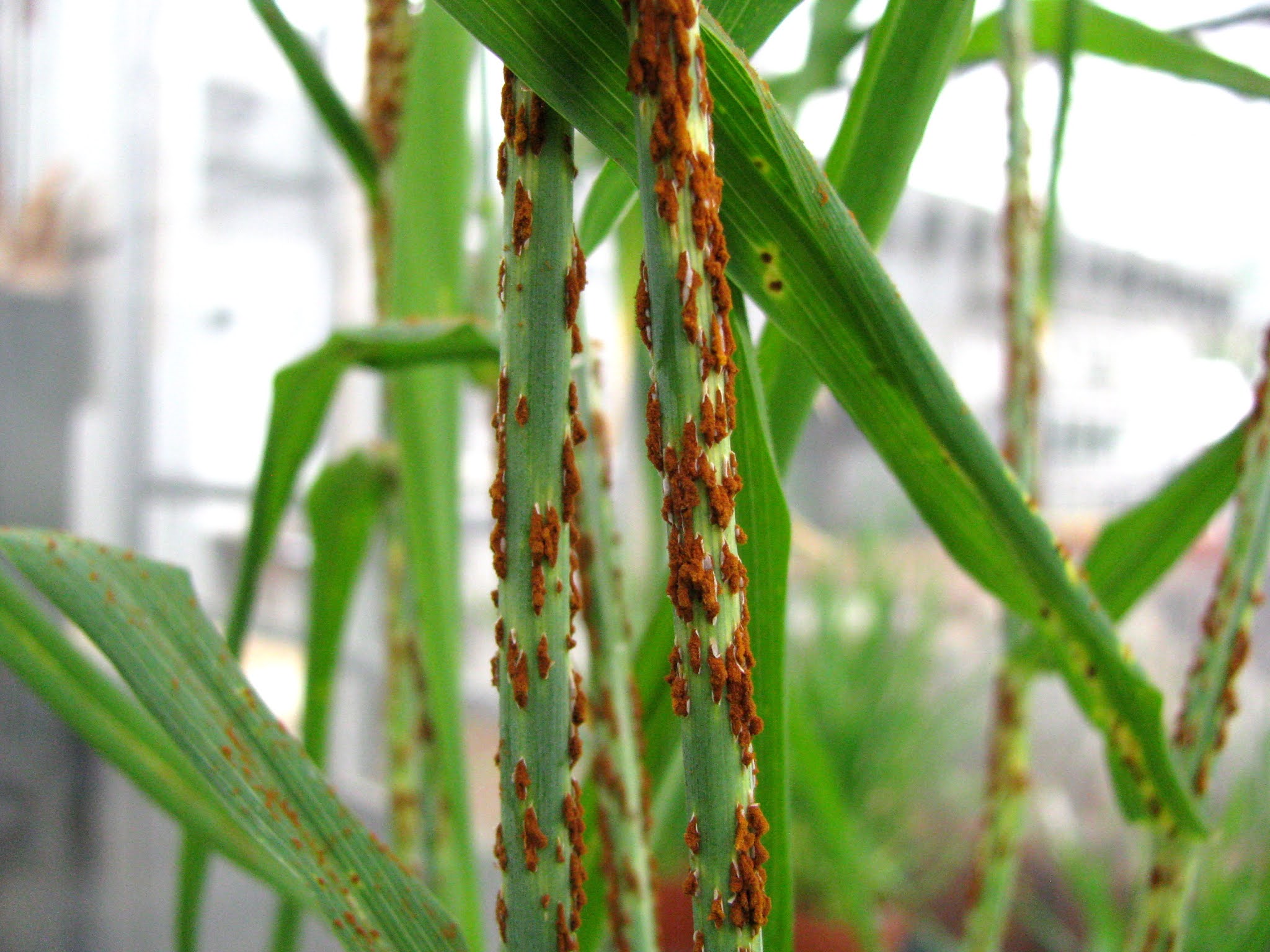
N Wheat (Triticum astevium) production in Kenya has been severely affected by stem rust Ug99 and its related race groups. The consequence of not controlling this disease is steep decline in the crop production thus creating food insecurity to over 70% of the small-scale holder farmers who depend on it as a source of food as well as income.
Puccinia graminis f. sp tritici (Pgt)

The causative agent of the disease Puccinia graminis f. sp tritici (Pgt) has been studied by researchers globally because of its rapid evolution of races within lineage overcoming existing resistant genes. Understanding the population structure will highlight the predominant race(s) as well as their geographical distribution. This information is required to enable breeding for resistant wheat varieties. The objective of this study was to characterize the population structure of Puccinia graminis f. sp tritici population in 2015. Using 10pgt Simple Sequence Repeats (SSR) markers 104 single uredenial-pustule samples were analysed. Minimum spanning network pattern was composed of five Simple Sequence Repeats multi-locus genotypes (SSR-MLGs) that were organized around three nodes based on samples chosen from wheat growing fields with the reference isolates; races TTKSK and TKTTF. In addition to this, non-parametric DAPC analysis showed the presence of single population made up of two predominant races from clade I (Ug99 race group) and clade IV-B (race TKTTF/TTTTF). Analysis of molecular variance (AMOVA) according to Bayesian Information Criterion showed clustering was majorly based within populations (0.576%) rather than among clusters (0.441%). Get the full articles by following the link Int. J. Agron. Agri. Res. 15(5), 1-7, November 2019.
 

Agriculture and Food Authority. 2 Quarter e- news bulletin ‘The Big 4 agenda’ 2017-2018.

Brown JKM, Hovmøller MS. 2002. Aerial dispersal of fungi on the global and continental scales and its consequences for plant disease. Science 297, 537-541.

Dean R, Van Kan JAL, Pretorius ZA, Hammond-Kosack KE, Di Pietro A, Spanu PD, Rudd JJ, Dickman M, Kahmann R, Ellis J, Foster GD. 2012. The Top 10 fungal pathogens in molecular plant pathology. Mol. Plant Pathol 13, 414430.

Doyle JJ, Doyle JL. 1990. A rapid total DNA preparation procedure for fresh plant tissue. Focus 12, 13-15.

Economic Survey. 2018. Kenya National Bureau of Statistics. ISBN: 978-9966-102-06-5.

Ellis JG, Lagudah ES, Spielmeyer W, Dodds PN. 2014. The past, present, and the future of breeding rust resistant wheat. Front. Plant Sci 5, 1-13.

Hovmøller MS, Sørenson CK, Walter S, Justesen AF. 2011. Diversity of Puccinia striiformis on cereals and grasses. Annu. Rev. Phytopathol 49, 197-217. DOI: 10.1146/annurev-phyto-072910-095230.

Jombart T. 2008. Adegenet: R package for the multivariate analysis of genetic markers. Bioinformatics 24, 1403-1405.

Jones A, Thomson D, Hort M, Devenish B. 2007. The U.K. Met Office’s Next-Generation Atmospheric Dispersion Model, NAME III. In: Borrego C., Norman AL. (eds) Air Pollution Modeling and Its Application XVII. Springer, Boston, MA.

Meirmans PG, Van Tienderen PH. 2004. Genotype and Genodive: two programs for the analysis of genetic diversity of asexual organism. Molecular Ecology Notes 4, 792-794.

Nei M. 1978. Estimation of average heterozygosity and genetic distance from a small number of individuals. Genetics 89, 583-590.

Newcomb M, Olivera PD, Rouse MN, Szabo LJ, Johnson J, Gale S, Luster DG, Wanyera R, Macharia G, Bhavani S, Hodson D, Patpour M, Hovmøller MS, Fetch TG, Jin Y. 2016. Kenyan Isolates of Puccinia graminis f. sp. tritici from 2008 to 2014: Virulence to SrTmp in the Ug99 Race Group and Implications for Breeding Programs Phytopathology 106(7), 729-736.

Olivera P, Newcomb M, Szabo LJ, Rouse MN, Johnson J, Gale S, Luster DG, Hodson D, Cox JA, Burgin L, Hort M, Gilligan CA, Patpour M, Justesen AF, Hovmøller MS, Woldeab G, Hailu E, Hundie B, Tadesse K, Pumphrey M, Singh RP, Jin Y. 2015. Phenotypic and genotypic characterization of race TKTTF of Puccinia graminis f. sp. tritici that caused a wheat stem rust epidemic in southern Ethiopia in 2013/14. Phytopathology 105, 917-928.

Paradis E, Claude J, Strimmer K. 2004. APE. Analysis of phylogenetics and evolution in R language. Bioinformatics 20, 419-420.

Park R, Fetch T, Hodson D, Jin Yue, Nazari K, Prashar M, Pretorius Z. 2011. International surveillance of wheat rust pathogens: progress and challenges. Euphytica 179, 109-117.

Pretorius ZA, Singh RP, Wagoire WW, Payne TS. 2000. Detection of virulence to wheat stem rust resistance gene Sr31 in Puccinia graminis f. sp. tritici in Uganda. Plant Diseases 84, 203.

R Core Team. 2015. R: A language and Environment for Statistical Computing. R Foundation for Statistical Computing, Vienna, Austria. Online publication. http://www.R-project.org/

Roelfs AP, Singh RP, Saari EE. 1992. Rust Diseases of Wheat: Concepts and Methods of Disease Management. CIMMYT, Mexico, D.F.

Saitou N, Nei M. 1987. The neighbor-joining method. A new method for reconstructing phylogenetic trees. Mol. Bio. Evol 4, 406-425.

Singh RP, William HM, Huerta-Espino J, Rosewarne G. 2004. Wheat rust in Asia: meeting the challenges with old and new technologies. In: New Directions for a Diverse Planet: Proceedings of the 4th International Crop Science Congress, Brisbane, Australia, 26 September–1 October 2004. 2004. ISBN 1 920842 20 9.

Singh RP, Hodson DP, Huerta-Espino J, Jin Y, Bhavani Njau P, Herrera-Foessel J, Singh PK, Singh S, Govindan V. 2011a. The Emergence of Ug99 Races of the Stem Rust Fungus is a threat to World Wheat Production Annual Review of Phytopathology Vol. 49, 465-481.

Singh RP, Hodson P, Jin Y, Lagudah ES, Ayliffe Bhavani B, Rouse MM, Pretorius ZA, Szabo LJ, Huerta-Espino J, Basnet BR, Lan C, Hovmøller MS. 2015. Emergence and Spread of New Races of Wheat Stem Rust Fungus: Continued Threat to Food Security and Prospects of Genetic Control. Phytopathology 105(7), 872-84.

Szabo LJ. 2007. Development of simple sequence repeats markers for the plant pathogenic rust fungus fungus, Puccinia graminis. Mol. Ecol. Notes 7, 92-94.

Vurro M, Bonciani B, Vannacci G. 2010. Emerging infectious diseases of crop plants in developing countries: impacts on agriculture and socio-economic consequences. Food Security 2, 113-132.

Wanyera R, Kinyua MG, Jin Y, Singh RP. 2006. The spread of stem rust caused by Puccinia graminis sp. tritici with virulence on Sr31 in wheat in Eastern Africa. Plant Disease 90, 113-120.

Wanyera R, Kyalo M, Wanjala M, Harvey J, Szabo LJ. 2017. Genetic characterization of the 2011 wheat stem rust pathogen population in Kenya using SSR markers. Plant pathology unpublished.


September 22, 2020

Investigation of biogas emitted from a dairy plant lagoon and proposing an innovative Honeycomb Gas Collector(HGC) | JBES V.15 N.3


Investigation of biogas emitted from a dairy plant lagoon and proposing an innovative Honeycomb Gas Collector(HGC)
By: Leila Peyman, Hamid Reza GHassemzadeh, Shamsollah Abdollahpoor, Hassan Taghipour


english language editing
JBES welcome all respective authors to submit their research paper / manuscripts, thesis paper in the field of Environmental Sciences, Biology, BiodiversitySpecies diversity, Ecology, Taxonomy and many more via online submission panel

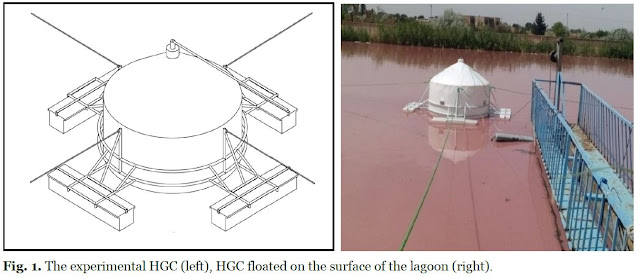
Peghah Dairy Plant in Tabriz, Iran, near Shahid Madani International Airport uses a combination of two wastewater treatment systems, namely, lagoon and activated sludge system. Presence of a lagoons near airports can affect passengers getting off the planes due to unpleasant odor and has always been a controversial issue from the urban planners’ point of view. Most of the biological activities in the lagoons are anaerobic producing odorous gases as a result. On the other hand, biogas produced by biological activities enters into the atmosphere, contributing to global warming. To avoid an environmentally adverse effects of the emitted gases from the lagoon in Peghah Diary Plant in Tabriz, the possibility of using the collected gases from the lagoon in heating processes within the plant was studied. In this study, a single experimental unit of an innovative gas collector, named Honeycomb Gas Collector (HGC), was designed and constructed to cover the surface of the lagoon and lagoon inputs were recorded and samples of biogas from the lagoon were collected and analyzed during April 2016 until March 2019. The highest daily amount of 44.82 m3 biogas from the entire lagoon was recoded in August 2016. Temperature and pH had the most and least significant effect on biogas production respectively. There was a strong relationship with a coefficient of 0.94 between the temperature and the volume of biogas produced. This system proved to be less costly and maintenance free method for covering the lagoon surface.

Investigation of biogas emitted from a dairy plant lagoon and proposing an innovative Honeycomb Gas Collector(HGC)

 Introduction

Peghah Dairy Plant is located in north of Tabriz, Iran, about 1.7km far from Shahid Madani International Airport. Passengers getting off the planes as well as nearby residents are affected by unpleasant odor emitted from lagoon. About 330 to 400 tons of raw milk is delivered to the diary plant for processing on daily basis. Around 1000m3/day of effluent is discharged from the plant. The capacity of anaerobic sewage and the activated sludge systems are 7500m3 and 800m3, respectively.

The high volume of wastewater produced by diary industries, along with their significant contamination, have led to enforcing strict regulations for these industries in different countries. Organic matter in dairy effluents comprises mainly of carbohydrates, proteins, and fats (Vlyssides et al., 2012). The dairy industries are one of the most polluting industries not only because of their high volume of wastewater, but also due to its characteristics (Kushwaha et al., 2011). Wastewater from such industries often cannot be treated by aerobic methods alone because of its high toxicity and chemicals as well as high Biological Oxygen Demand (BOD). The amounts of suspended solids are 2000gr/m3, COD (Chemical Oxygen Demand) 3700gr/m3, and BOD 2500gr/m3 (Sabliy et al., 2009). The combined method is the best for the treatment of dairy wastewater. Researchers have proposed an anaerobic-anaerobic treatment method for dairy wastewater treatment (Kushwaha et al., 2011).

The average consumption of milk per capita per year in Iran is about 91kg, while the average consumption in the world is 156kg and in European countries it is 300kg. In order to increase per capita consumption of milk in the country, the volume of milk and dairy products will have to be increased and this will result in producing more wastewater. The wastewater of the dairy industries is warm and has high COD, this makes it suitable for anaerobic treatment in the first stage. Anaerobic processes produce significant amounts of methane. Also the unpleasant odor production occurs in this stage. Whey is one of the most polluting wastewater. Its biochemical constituents are rich in organic matter (Shete, and Shinkar, 2013; Rajshoori et al., 2000). Worldwide cheese production generates more than 145 million tons of whey each year. Wastewater from the cheese industry has a very high level of COD about 50,000 to 80,000mg/L. (Najafpour et al., 2008). 

READ MORE

Research Paper on vegetables | Towards valorizing spinach and amaranth’s leaves in Eastern democratic republic of Congo | IJAAR 2019

Common anaerobic methods in dairy wastewater treatment mainly include Up flow Anaerobic Baffled Reactor (UABR), Up flow Anaerobic Sludge Blanket reactor (UASB), up flow Anaerobic Fixed Biofilm Reactor (UAFBR), Anaerobic Lagoon and common aerobic methods include conventional Activated Sludge, Moving Bed Biofilm Reactor (MBBR), Sequencing Bach Reactor (SBR) based on activated sludge method. Sometimes the post-treatment phase for the dairy industry wastewater is carried out by physio-chemical methods which include coagulation and flocculation methods. These methods can be referred to as membrane processes such as Nano filtration and reverse osmosis (Kushwaha et al., 2011).

Investigation of biogas emitted from a dairy plant lagoon and proposing an innovative Honeycomb Gas Collector(HGC)
Lagoon systems are suitable for wastewater treatment in food processing industries. Anaerobic lagoons in the US and Australia have high acceptability due to their ability to treat high BOD wastewater, availability of large areas for lagoon construction, and low operating costs (Johns, 1995). It should be noted that due to space constraints in Europe, demand for lagoons is low and they are more inclined to use reactor systems. In Asia, lagoons are mostly used for palm oil purification (BOD>25000mg/L) (Laginestra, 2012).

The main advantage of using lagoon systems is the ease of construction, operation, and maintenance. However, a larger land is needed to build it. It is possible to use the lagoon if the whole complex of treatment system is located out-of-town space of city. Warm weather improves bacterial growth conditions. The pH of the lagoon should be 7 to 8. At pH below 6.5, the condition becomes acidic, odor production and sludge production increases. Under normal anaerobic conditions, organic matter is converted to biogas during the process of Hydrolysis, Acidogenesis, Acetogenesis and Methanogenesis. If there is no equilibrium between Acidogenesis and Methanogenesis phases, the odor is more likely to be produced (Zhang et al., 2013).

In UASB, Fat, Oil and Grease (FOG) may accumulate. The growth of dispersed grains and the accumulation of sludge and FOG leaching from the reactor cause severe operational problems. To overcome these problems, pre-treatment methods such as fat removal by Dissolved Air Flotation (DAF) or the use of some contact reactors will be required (Rilo et al., 2014). This operation needs a long launch time. The reactor requires a skilled operator and continuous monitoring operations. (Rajeshwari et al., 2000).

In the UABR, the wastewater is treated by passing through a number of upward and downward chambers. In this type of reactor, the solids retention time in the reactor is longer than the hydraulic retention time. The severe effect of shocks gradually diminishes on Sequential baffles. Due to the accumulation of gas in the UABR reactor, there is no access to the reactors in case of any problems or to check overflows.

To increase the efficiency in UABR, the media is mounted in the upstream section of the reactor (UAFBR), which is used to prevent sludge escape as well as increase biological contact and subsequently increase the treatment efficiency.

Each of the anaerobic methods already mentioned above require their own equipment and has its own complications. The biogas produced by the anaerobic process includes CH4 (70-60%), CO2 (40- 30%), H2S (10-2000 ppm), N2 (less than 2%), NH3, H2, CO, and O2 (Siefers, 2010). The biogas odor arises mainly from H2S, Volatile Organic Compounds (VOCs), and NH3. H2S is extremely odorous and corrosive and even in very small quantities causes severe corrosion in pipes and other equipment (Krich, 2005).

The overall goal is to prevent the releasing of biogas and some odorous gases produced during the anaerobic process into the atmosphere. In the present work, a single experimental unit of an innovative gas collector, named Honeycomb Gas Collector (HGC), was designed and constructed to cover the surface of the lagoon for reducing odor, especially in windy days and preventing methane release into the atmosphere. Then, the amount of methane and hydrogen sulfide in biogas and the factors affecting biogas production were studied over three years.

Get the full articles by following this link  J. Bio. Env. Sci. 15(3), 1-9, September 2019.

Reference   of   the   articles :

Johns MR. 1995. Development in wastewater treatment in the meat processing industry: A review, Bioresource technology, volume 54(1995) – 203-216. BioSource Technology 54 (1995) 203-216

Krich K, Augenstein D, Batmale JP, Benemann J, Rutledge B, Salour D. 2005. Biomethane from dairy waste. A Sourcebook for the Production and Use of Renewable Natural Gas in California. prepared for Western United Dairymen Michael Marsh.

Kushwaha JP, Srivastava VCH, Mall ID. 2011. an overview various technologies for the treatment of diary wastewaters, Critical reviews in food science and nutrition 51, 442-452.

Laginestra M. 2012. Covered Anaerobic Lagoons Final Report. published by Meat & Livestock Australia Limited ABN 39 081 678 364 (MLA).

Najafpour GD, Hashemiyeh BA, Asadi M, Ghasemi MB. 2008. Biological Treatment of Dairy Wastewater in an Upflow Anaerobic Sludge-Fixed Film Bioreactor, American-Eurasian J. Agric. & Environ. Sci., 1818-6769 4(2), 251-257.

Rajeshwari KV, Balakrishna M, Kansal A, Lata K, Kishore VVN. 2000. State of the Art of Anaerobic Digestion Technology for Industrial Wasetwater Treatment, Rnnewable and Sustainable Energy Reviews 4(2000), 135- 156.

Rilo SM, Coimbra RN, Villacorta JM, Otero M. 2014. Treatment of Dairy Industry Wastewater by Oxygen Injection, Journal of Cleaner Production.

DOI: 10.1016/j.jclepro.2014.08.026.

Sabliy L, Kuzminskiy Y, Gvozdyak P, Lagod G. 2009. Anaerobic and Aerobic Treatment of Wastewater of Milk Plants, Proceedings of ECOpole- Vol. 3, No. 2, 373-378.

Shete BS, Shinkar NP. 2013. Dairy Industry Wastewater Sources, Characteristics & its Effects on Environment. Research Article. International Journal of Current Engineering and Technology. 2277 – 4106. vol.3, No.5. 1611-1615.

Siefers AM. 2010. A Novel and Cost-Effective Hydrogen Sulfide Removal Technology Using Tire Derived Rubber Particles, Theses and Dissertations, Iowa State University, 11281.93 pages.

Stenglein RM, Clanton CJ, Schmidt DR, Jacobson LD, Janni KA. 2011. Covers for Mitigation Odor and Gas Emissions in Animal Agriculture: www.exrension.org/pages/15538/air-quality-in-animal-agriculture.

Vlyssides A, Tsimas E, Barampouti EM, Mai S. 2012. Anaerobic Digestion of Cheese Dairy Wastewater Following Chemical Oxidation. Bio systems engineering. 15375110. II 3, 253-258

Zhang XL, Yana S, Tyagi RD, Surampalli RY. 2013. Odor Control in Lagoons. Journal of Environmental Management. 124, 62-71.

DOI: 10.1016/j.jenvman. 2013.03.022