April 10, 2016

Effect of Ethephon stimulation frequency in downward tapping on the production potential in upward tapping among PB 260 clone of Hevea brasiliensis in Ivory Coast


By Kouadio Dian1*, Maturin Koffi Okoma1, Edmond Kouablan Koffi1, Désiré N’da Pokou1, Modeste Kouassi Kan1, Gislaine Zaka Kouadjo1, Nazaire Koffi II Kouassi1, Abdourahamane Sangare3 and Samuel OBOUAYEBA
  1. Laboratoire Central de Biotechnologie, Centre National de Recherche Agronomique Abidjan, Côte d’Ivoire
  2. Station de recherche de Bimbresso, Centre National de Recherche Agronomique Abidjan, Côte d’Ivoire
  3. CORAF, Dakar, Sénégal
The present study evaluates the impact of different stimulation frequencies of Ethephon in downward tapping on the production potential of trees in upward tapping of the clone PB 260 of Hevea brasiliensis. Six parameters are measured: production per tree, tapping panel dryness percentage and four latex biochemical parameters which were dry rubber content, inorganic phosphorus, sugar and thiols. The results show that in downward tapping, generally, the biochemical parameters level is inversely proportional to the stimulation frequency during years 9 and 10. Regarding the production, beyond four stimulations per year, it is inversely proportional to the stimulation frequency. 

When the trees are tapped upward with a four stimulation uniform per year, the production continues to be low according to the preceding frequency stimulation in downward tapping beyond four stimulations per year. However, the factors which caused this decrease don’t seem to be the same in the first and the second years of upward tapping. In the first year of upward tapping, according to the evolution of the biochemical parameters, the decrease in production is linked to physiological tiredness due to the stimulation in downward tapping. On the other hand, in the second year, it is a phenomenon of familiarization to Ethephon which could explain the decrease in production on treatments which received more than four stimulations per year in downward tapping. In second year of upward tapping, the trees need more than four times per year Ethephon stimulations to reach their production potential. Get the full articles at: Int. J. Agr. Agri. Res. 8(2), 51-63, February 2016.
Effect of Ethephon stimulation frequency in downward tapping on the production potential in upward tapping among PB 260 clone of Hevea brasiliensis in Ivory Coast
More articles of this issue: Impact of environmental conditions on the yield variability of durum wheat (Triticum durum. Desf ) and its associated characters at Algerian semi-arid areas

Journal Name: International Journal of Agronomy and Agricultural Research (IJAAR)
Publisher Name: International Network For Natural Sciences (INNSPUB)

March 12, 2016

Assessment of diversity and distribution of Snails (Mollusca: Gastropoda) in the Agroecosystem of Faisalabad, Pakistan

Assessment of diversity and distribution of Snails

By Javaria Altaf1*, Naureen Aziz Qureshi2, Syed Hammad Raza3, Muhammed Javed Iqbal Siddiqui4
  1. Department of Zoology, Government College University Faisalabad, Pakistan
  2. Government College Women University Faisalabad, Pakistan
  3. Department of Botany, Government College University Faisalabad, Pakistan
  4. Department of Zoology, Government Postgraduate College, Samanabad, Faisalabad, Punjab,
    Pakistan
Abstract
Gastropods have never been studied in Punjab, Pakistan with reference to its diversity and distribution. Different ecological factors have been studied which affect the distribution of the snail in the agroecosystem of this region. Total number of 19290 snails specimens, were collected from different cropland areas of 24 villages of Faisalabad including sugarcane, wheat, fodder, vegetables fields and ditches. The specimens were identified on the basis of recent identification keys and diagrammatic description provided in them to understand the biodiversity in this region. The diversity index was found highly significant in sugarcane, wheat, fodder, and vegetables fields however the results were non-significant in case of ditches. The relative abundance was maximum in sugarcane and least in ditches. The diversity index was significantly high in all months except in April whereas the relative abundance was maximum in July and August. It can be concluded that due to environmental degradation and water pollution the snail diversity is non significant, in ditches however in the agroecosystem it is a pest. It can be suggested that strategies must be developed to control water quality deterioration and its biological control as a pest.Get the full articles at: http://bit.ly/22b673z
Snails Diversity

Journal Name: Journal of Biodiversity and Environmental Sciences (JBES)

Publisher Name: International network For natural Sciences (INNSPUB)

To submit your original Research Paper please visit Submit Your Articles 

Source: Journal of Biodiversity and Environmental Sciences @2016 Research Journal of Environmental Sciences

February 23, 2016

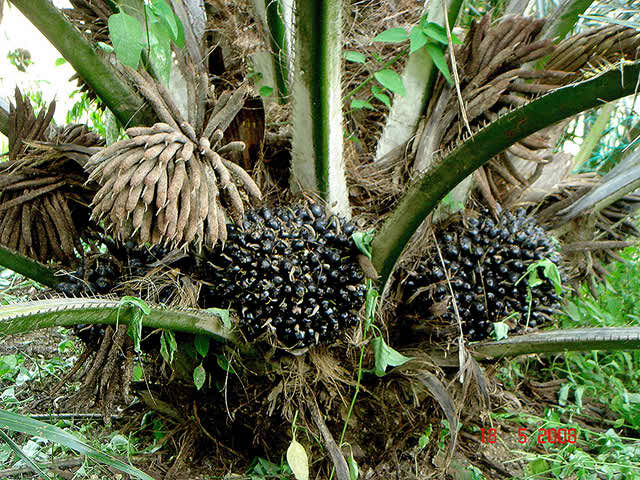
Estimating stored carbon stock in oil palm (Elaeis guineensis Jacq.) plantation by age group in PT daria dharma pratama plantation Bengkulu Indonesia - IJJAR


By: Yuliyanto, Dede Setiadi, Sulistijorini
Key Words: Carbon biomass, Oil palm plantation, PT DDP.
Int. J. Agr. Agri. Res. 8(1), 81-86, January 2016.
Abstract
The increasing concentration of carbon in the atmosphere is a serious environmental problem that can affect living system on earth. The increase in greenhouse gas emissions caused global warming that will affect the world climate change and rising sea levels. Climate change will disrupt farming system in both the micro and macro scale.


Estimation of forest carbon emissions is one of the important efforts to reduce climate change. Land clearing for palm oil plantations will affect the stored carbon in the forest reserves. The aim of this study is to determine the biomass stored carbon stocks in oil palm plantations by age group in oil palm plantations in PT Daria Dharma Pratama (PT DDP), Bengkulu Province, Indonesia. Methods of measuring the stored carbon stock of palm oil biomass using allometric equations, is non-destructive method.


Methods of measuring the stored carbon stock of undergrowth biomass and piled of oil palm fronds up was conducted by destructive methods. The largest biomass stored carbon stock was in the age group of 11-15 years crop of 69.32 tonnes ha-1. Then, in the age group of 16-20 years were 54.13 tonnes ha-1, age group of >20 years were 34.91 tonnes ha-1, the age group of 6-10 years were 34.16 tonnes ha-1, and the age group 0 – 5 year were 6.98 tonnes ha-1, respectively. Stored carbon stock in oil palm was influenced by the age of the plant, soil fertility, as well as plant growth and development. Get the full articles at: http://bit.ly/21caZbF
Journal Name: International Journal of Agronomy and Agricultural Research (IJAAR)
Publisher Name: International Network For Natural Sciences (INNSPUB)


Download Pdf 

Source: International Journal of Agronomy and Agricultural Research @2015  Journal of agronomy

February 13, 2016

Morphological and physiological changes of aloe (Aloe barbadensis Miller.) in response to culture media - IJAAR an open access scholarly research journals


By Amir Foroutan Nia1, Abohassan Farhang Sardrodi2, Mohammad Mehdi Habibi1, Sanaz Bahman1*
  1. Department of Horticulture, Islamic Azad University, Karaj Branch, Karaj, Iran
  2. Department of Horticultural Sciences, University of Zanjan, Iran
Key words: Aloe barbadensis Miller., Culture media, Morphological, physiological parameters


Aloe is a plant of the family Liliaceae, with fleshy leaves and filled with gel containing health care costs are enormous and are used in the treatment of many diseases. To investigate the effects of culture media on morphological and physiological parameters of Aloe (Aloe barbadensis Miller.) plants, an experiment on the basis of randomized complete blocks design with 13 treatment and 4 replications was conducted in 2013.


The treatments were components of manure, sand, peat, pumice, tea wastes and rice husks in two level (25% and 50%) with soil in two level (50% and 75%). Effect of culture media was significant on all of parameters except for leaf diameter and total suspended solid (TSS). Results showed that the most number of leaves per plant (13 leaves.plant-1) and root weight (41g.plant-1) in medium of 25% pumice + 75% soil, the most leaf width (3.4 cm) with 25% peat + 75% soil, the maximum offset weight (65.5 g.plant-1), gel weight (257.2 g.plant-1) and weight of plant aerial parts (547.5 g.plant-1) in treatment of 50% pumice + 50% soil and the highest number of offset per plant (3.25 offset.plant-1) with application of 25% tea wastes + 75% soil was attained.
The best treatments to increase the morphological and physiological parameters are components of pumice, peat and tea wastes in combination with soil because of higher amount of organic carbon and cation exchange capacity and proper pH of the media. 


Journal Name: International Journal of Agronomy and Agricultural Research (IJAAR)
Publisher Name: International Network For Natural Sciences (INNSPUB)

Source: International Journal of Agronomy and Agricultural Research @2015  Journal of agronomy

February 9, 2016

Estimates of gene action for yield and its components in bread wheat Triticum aestivum L. - IJAAR An Open Access Research Journals


By AA. Kandil1, AE. Sharief2,*, Hasnaa SM. Gomaa3
  1. Department of Agronomy, Mansoura University, Egypt (1)
  2. Agriculture Research Center, Ministry of Agriculture and land reclamation, Egypt  (2,3)
Key Words: Bread Wheat Cultivars, Narrow Sense Heritability, Broad sense heritability.


In order to study gene action for yield and its components using 8 × 8 diallel crosses excluding reciprocals during 2013/2014 and 2014/2015 growing seasons at Tag El-Ezz Research Station, Dakahlia Governorate, the genotypes were Sides 12, Gemmiza 11, Maser 1, Maser 2, Shandaweel 1, Giza 168, Sakha 93, and Sakha 94. Results revealed that both additive (D) and dominance (H1 and H2) genetic variance were significant for the all studied characters, indicating the importance of additive and dominance gene effects in controlling these characters.

The dominance genetic variance was higher in the magnitude as compared to additive one, resulting in (H1/D)0.5 exceeding than more unity for all studied characters except spike density and number of tillers/plant. The “F” values which refer to the covariance of additive and dominance gene effects in the parents revealed positive and significant for flag leaf length and flag leaf area, extrusion length, number of tillers/plant number of spikes/plant, number of grains/spike and 1000- grain weight, indicating that dominant alleles were more frequent than the recessive ones in the parents for this character, while negative “F’ value for remaining characters indicated excess of recessive alleles among parents.


The overall dominance effects of heterozygous loci h2, indicated directional dominance for heading date, flag leaf length, flag leaf area, spike length, extrusion length, spike density, grain yield/spike, number of tillers/plant number of spikes/plant, number of grains/ spike and grain yield/plant. Proportion of genes with positive and negative effects in the parent (H2/4H1) was deviated from 0.25 for all studied characters Heritability in narrow sense was moderate (0.369) for grain yield/plant. Get the full articles at: http://www.innspub.net/ijaar/estimates-of-gene-action-for-yield-and-its-components-in-bread-wheat-triticum-aestivum-l/


Journal Name: International Journal of Agronomy and Agricultural Research (IJAAR)
Publisher Name: International Network For Natural Sciences (INNSPUB)

Download Pdf 

Source: International Journal of Agronomy and Agricultural Research @2016  Journal of agronomy

February 7, 2016

Effects of some environmental factors on annual weed shepherd's purse (Capsella bursa-pastoris (L.) Medik.) - JBES An Open Access Research Journals


By Rouhollah Amini
Department of Plant Ecophysiology, Faculty of Agriculture, University of Tabriz, Tabriz, 5166616471, Iran

Key words: Germination, Drought, Salinity, Seedling dry weight, Shepherd's purse.

Abstract


Shepherd's purse (Capsella bursa-pastoris (L.) Medik.) is an annual weed species with a wide distribution in cereals of East Azarbaijan, Iran. Tow experiments were carried out based on randomised complete block design with four replications in Tabriz, Iran in 2014 to evaluate the effects of salinity and drought stress on shepherd's purse germination and early seedling growth. The salinity levels were included 0, 4, 8, 12, 16 and 20 dS m-1 (deci Siemens per meter) sodium chloride (NaCl). The drought stress levels were included 0,-0.4,-0.8,-1.2,-1.6 and-2.0 MPa osmotic potentials were obtained by polyethylene glycol 8000 as osmotica.


Results indicated that the effect of salinity was significant on seedgermination percentage and rate, seedling root and shoot length and seedling dry weight. The all traits reduced significantly by increasing the salinity level. In salinity of 20 dS m-1 the germination% of shepherd's purse was < 35 and the seedling dry weight reduced 65% in comparison with control (0 dS m-1). Also the effect of drought stress was significant on seed germination, seedling length and seedling dry weight and all the traits decreased by increasing the osmotic potential. The germination% of shepherd's purse seeds in osmotic potential of-2.0 MPa was < 32 and the reduction in seedling dry matter was > 60%. Generally, it could be concluded that drought stress such as limited irrigation and salinity would be effective strategy for reduction in germination and early seedling growth of this annual weed species. Get the full articles at: http://www.innspub.net/volume-6-number-5-may-2015-jbes/


Journal Name: Journal of Biodiversity and Environmental Sciences (JBES)

Publisher Name: International network For natural Sciences (INNSPUB)

February 4, 2016

Effect of sowing year and seedbed type on yield and yield component in bambara groundnut (Vigna subterranea (L) Verdc) in woodland savannahs of Cote d’Ivoire - IJAAR | An Open Access Research Journal


  • By Kouassi N’dri Jacob*, Ayolié Koutoua, Boyé Mambe Auguste Denise
Department of Agroforestry, University of Jean Lorougnon Guede, Côte d’Ivoire

Abstract:
Bambara groundnut (Vigna subterranea) is one of the most promising food legumes in Africa, due to its agronomic and nutritional potential. To take advantage of these attributes, several research programmes gathering agronomic and genetic data are being implemented throughout Africa. In this context, the responses of yield and yield components to year sowing and seedbed type were tested in a three densities (13 900 plants ha−1, 62500 plants ha−1 and 250000 plants ha−1) field experiment using a bambara groundnut landrace with a semi-bunch growth habit. Three years sowing: 2005, 2006 and 2007 were coupled with two seedbed types – raised and flat. A factorial trial using a split-plot design with three replicates was set up to analyse seed yield and plant biomass, as well as nine yield components (Plant spread, Plant height, Number of leaves per plant, Number of pods per plants, Number of seeds per plant, Pods weight per plant, Pod fill ration, Seed harvest index). The seedbed type and year of experiment did not influence significantly the marketable yield and plant biomass (p> 0.05). This result has been attributed to the suitability of the amount and distribution of rainfall and temperature for the production of bambara groundnut at the target site. Based on the trend of yield response, cultivation of landraces of bambara groundnut characterized by a semi-bunch growth habit on flat seedbeds was suggested in woodland savannas of Côte d’Ivoire to enhance seeds yield and reduce labour. Get the full articles at: http://goo.gl/9L7cxk


Journal Name: International Journal of Agronomy and Agricultural Research (IJAAR)

Publication Name: International Network For Natural Sciences (INNSPUB)

DOWNLOAD PDF